Inverter and battery brands, and solar mounting kits
Prices are typical and approximate (October 2026). Always get at least three quotes from MCS-certified installers.
Part A: Four common inverter and battery brands
An inverter turns the DC power from your panels into the AC power your home uses. A hybrid inverter can also charge and empty a battery. Most installers sell an inverter and battery from the same brand, so they work well together.
| Brand | What it makes | Typical home battery size | Rough UK price (approximate) | Warranty (check the maker's terms) |
|---|---|---|---|---|
| SolaX Power | Hybrid inverters and its own batteries (Triple Power, T-BAT) | About 4.5 to 25 kWh, built up in modules | About £3,500–£4,500 installed for 5.8 kWh, or £5,500–£6,500 for 11.6 kWh | Batteries: 10 years, with about 60% of capacity left at the end |
| Fox ESS | Hybrid inverters and its own batteries (ECS, EQ, EP and Mira ranges) | About 2.9 to 14.4 kWh, built up in modules | About £2,800–£3,800 installed for 4.03 kWh, or £4,500–£5,500 for 8.06 kWh. One of the cheapest brands | Batteries: 5 years as standard. Register online and connect it to Fox Cloud to get up to 12 years in total, with at least 70% of capacity left |
| Solis | Mostly inverters, including the S6 hybrid range. Pairs with other makers' batteries, such as Fogstar or Pylontech | Depends on the battery you choose | Example: a Solis S6 3.6 kW hybrid with a Fogstar 16.1 kWh battery is listed at about £4,255 installed | Inverter warranty set by Solis. The battery warranty comes from the battery maker |
| SMA (German) | Mostly inverters: Sunny Boy (solar), Sunny Boy Storage (battery inverter) and the newer Sunny Boy Smart Energy hybrid. Has long paired with BYD Battery-Box batteries, and now sells its own SMA Home Storage battery too | BYD: about 2.6 to 22 kWh. SMA Home Storage: 3.28 kWh modules, for example 6.56 kWh | Hardware only, before VAT: Sunny Boy Smart Energy 3.6 kW from about £1,279, and SMA Home Storage about £1,413 per 3.28 kWh module. Fitting costs extra | BYD: 10 years, with about 60% of capacity left. Check SMA's terms for the inverter |
What stands out - Fox ESS and SolaX: low prices, and you can add battery modules later. Check the warranty conditions, because Fox ESS needs online registration and monitoring. - Solis: inverters with a good reputation for value. Lets you choose your battery. - SMA: premium, German-made inverters that last a long time and have strong support. You usually pay more.
Maker websites: SolaX UK · Fox ESS · Solis UK · SMA UK · BYD Battery-Box
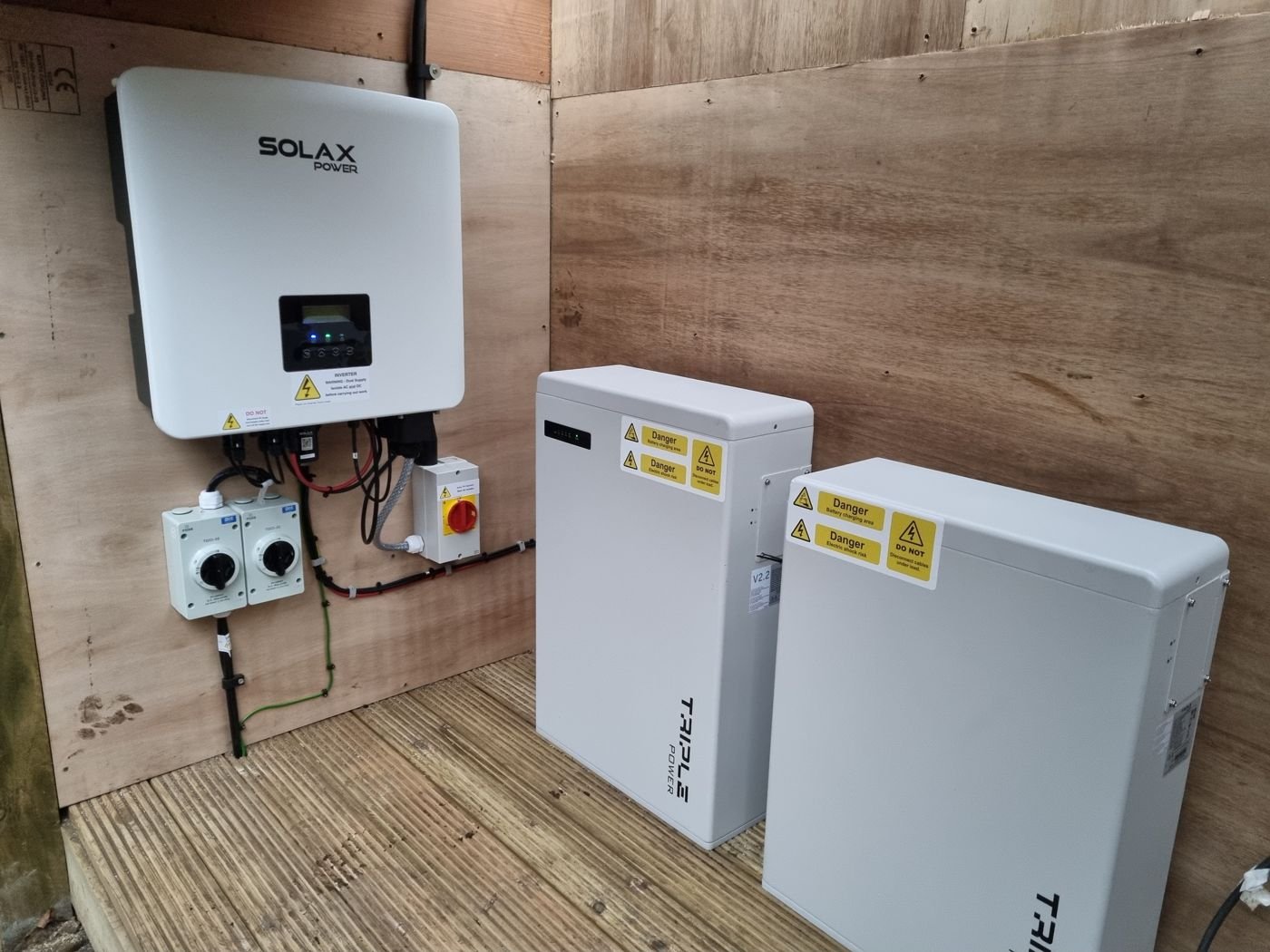
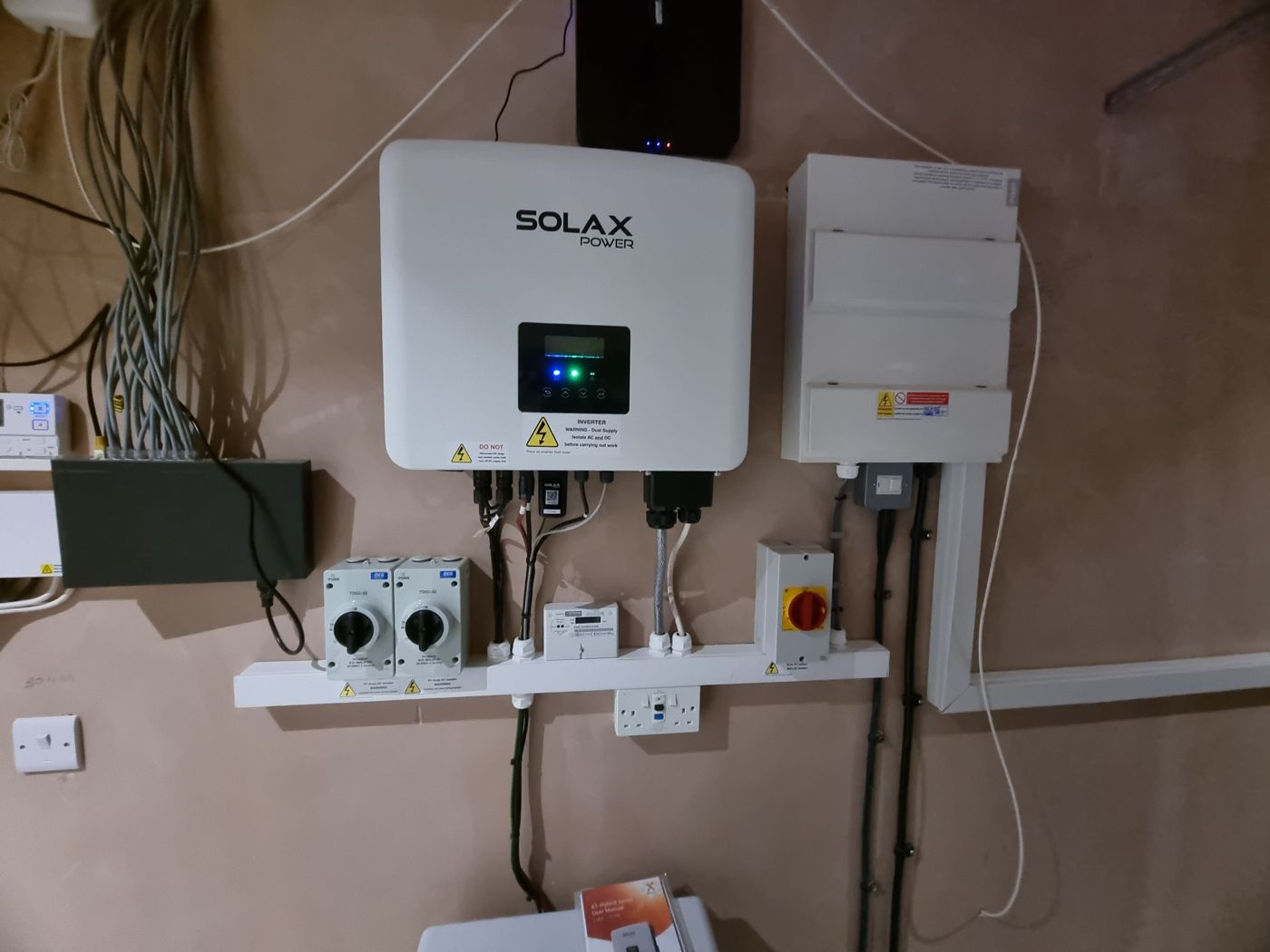
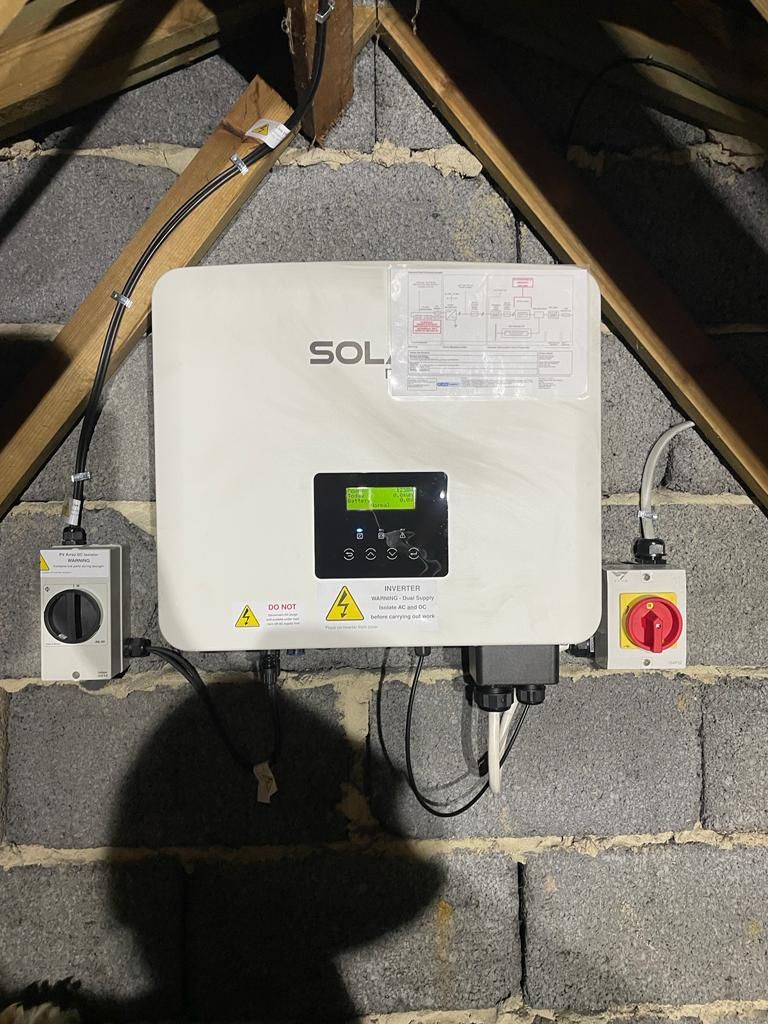
Real installs: inverters and batteries
Photos from real UK installs.
Part B: Solar panel mounting kits
What they are
A mounting kit is the set of hooks, rails, clamps and bolts that holds your panels to the roof. It must stand up to wind and snow, keep the roof watertight, and not make the roof's fire safety worse.
Why they matter
- Roof type: tiles, slate, metal and flat roofs each need different fixings.
- Tilt and direction: south-facing at about 30–40° is ideal. East–west roofs also work well.
- Wind and snow: wind can try to lift panels off the roof, and the risk changes with where you live, how high the roof is and how exposed it is. A kit that's fine in London may need more fixings in Scotland or on a hill.
- Standards: kits should be certified under MCS 012 (the MCS standard for mounting kits). Wind loads should be worked out using BS EN 1991-1-4 (the Eurocode for wind) or BS 6399-2. Snow loads come from BS EN 1991-1-3. In-roof systems that replace tiles may use BS 5534. An MCS 012 certificate shows the product passed tests. It does not prove your own roof is strong enough, so your installer still needs to check your roof.
Main types
| Type | What it is | Good points | Downsides |
|---|---|---|---|
| On-roof, with rails | Hooks go under the tiles, and rails above the tiles hold the panels | The most common and cheapest. Easy to fix or remove | Sits above the roof, so it's more visible. Hooks have to be fitted carefully so tiles don't crack |
| In-roof (integrated) | Panels replace some of the tiles and sit flush with the roof | Neat look. Popular on new builds and when re-roofing | Costs more. Takes more work to get watertight. Panels run a little hotter |
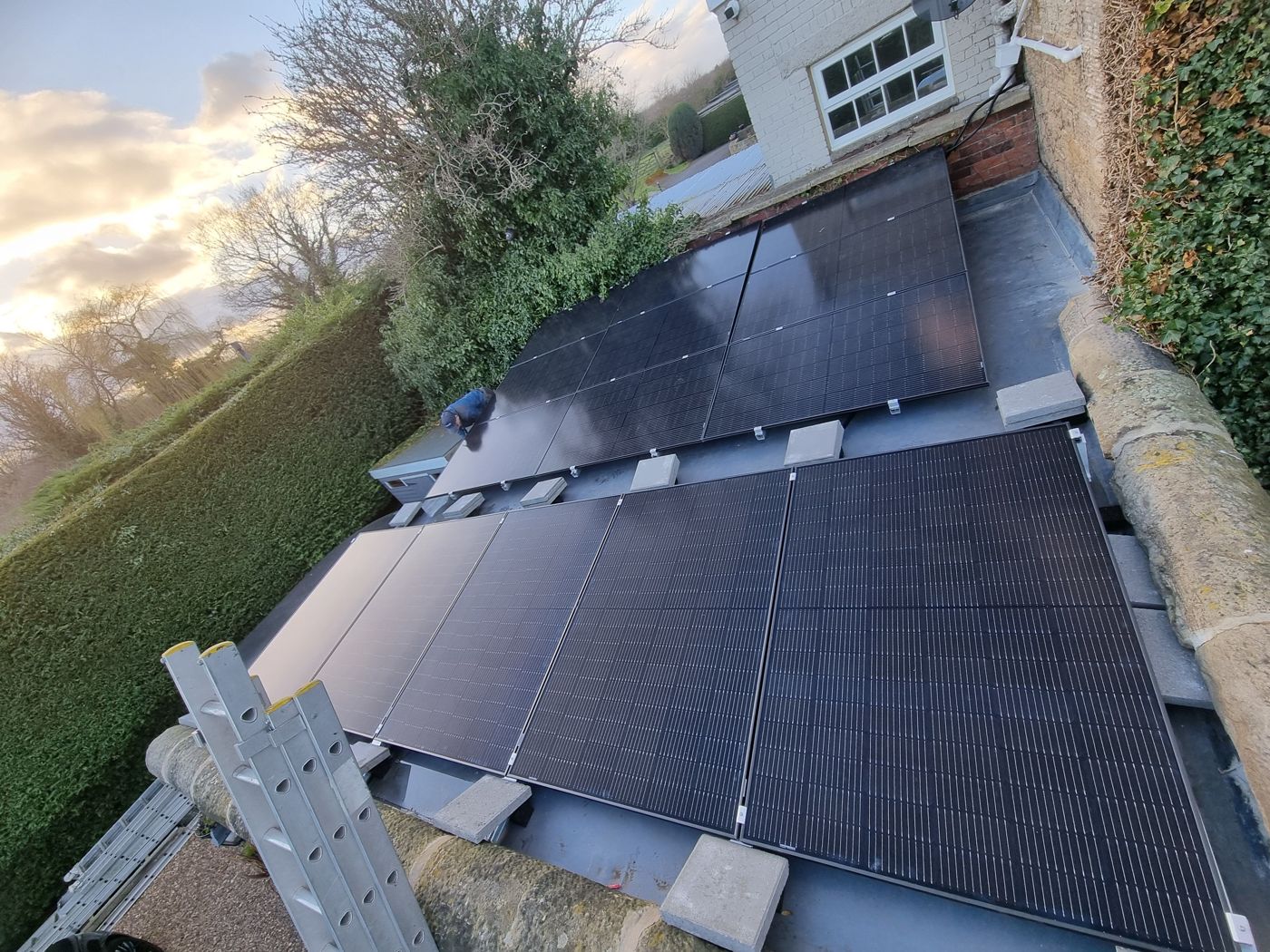
| Flat roof, ballasted or east–west | Frames held down by weights, often tilted east and west | No holes in the roof. Fits more panels | The roof must take the extra weight. Wind needs checking |
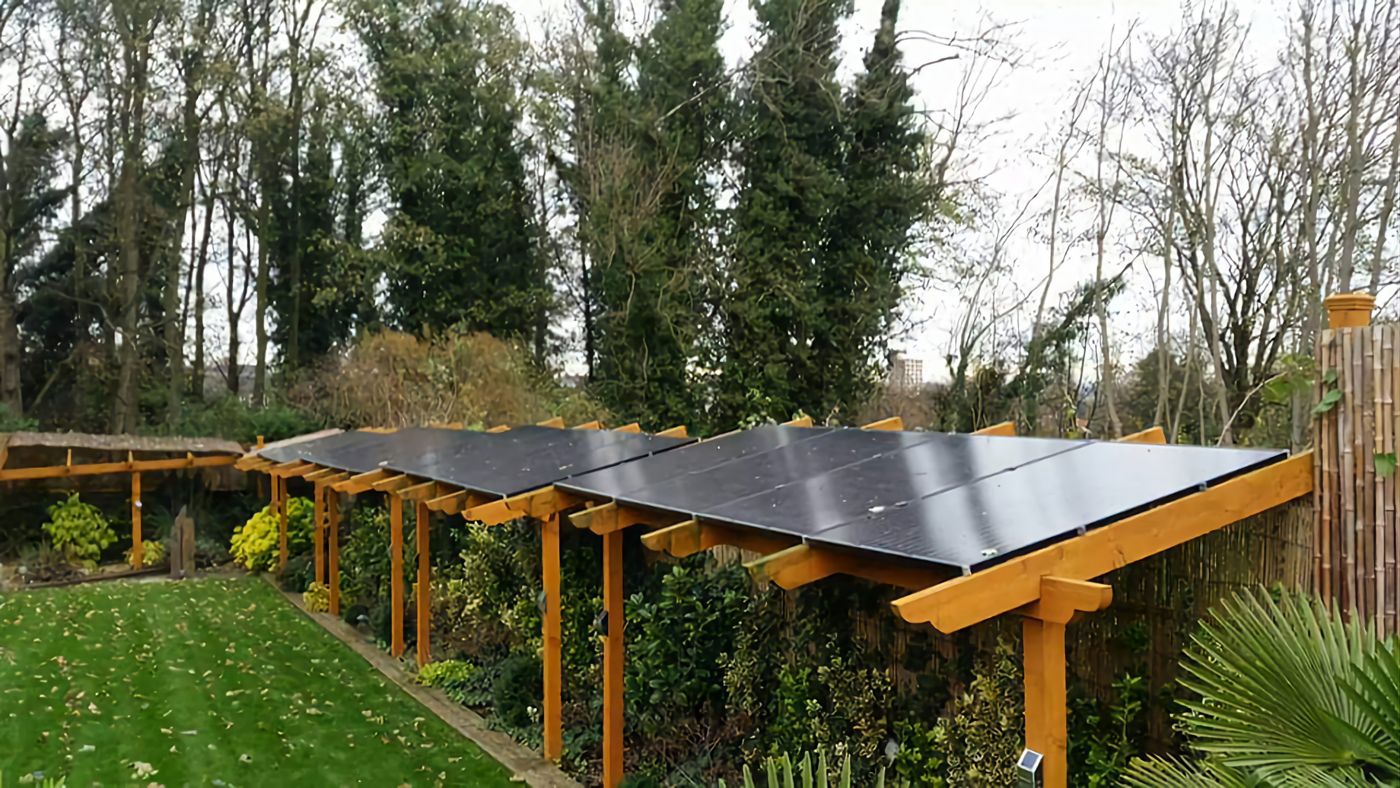
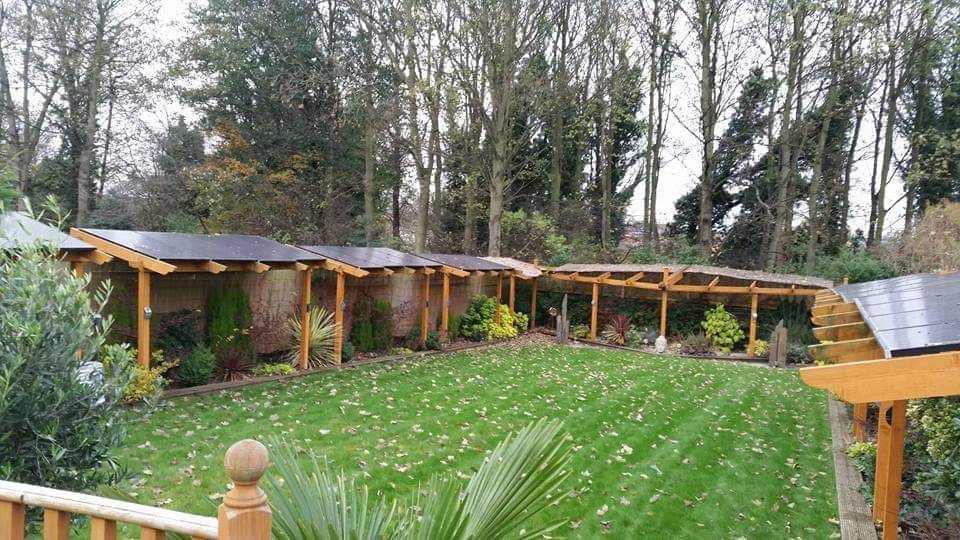
| Ground mount | Frames in the garden | Best tilt and direction. Easy to clean | Takes up space. Needs trenching for cables. May need planning permission |
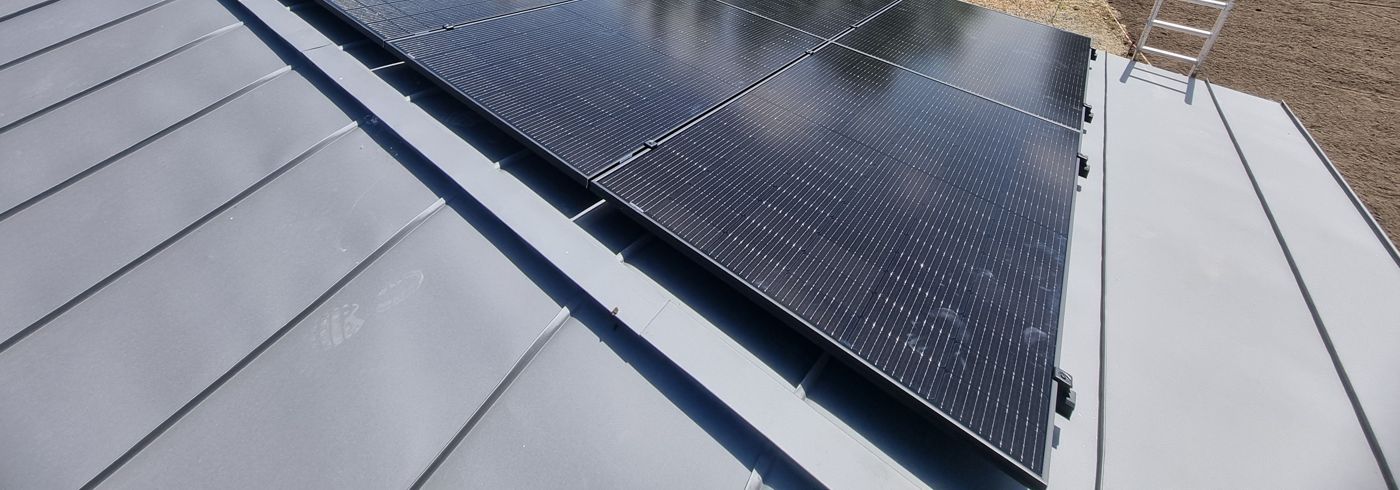
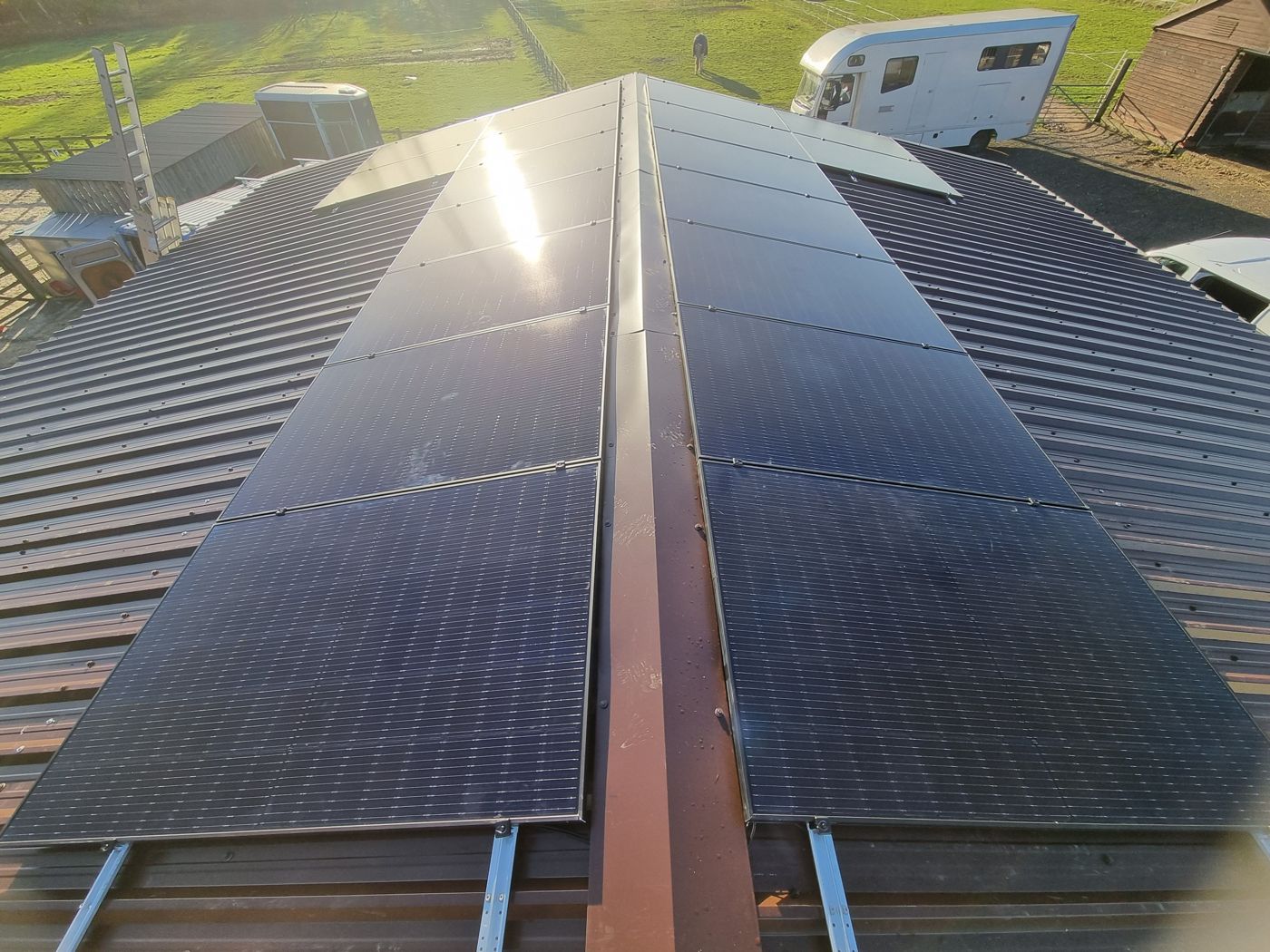
Real installs: mounting
Photos from real UK installs.
Questions to ask your installer
- Which mounting kit is it, and is it MCS 012 certified?
- Have you worked out wind and snow loads for my house, using BS EN 1991? Can I see the result?
- Will someone check that my roof timbers are strong enough?
- How will you keep the roof watertight, and what happens to any cracked tiles?
- What warranty comes with the kit and with the installation work?
- Do you fit bird guards, and how will the cables be run?
Common mounting brands
Renusol · Van der Valk Solar Systems · GSE In-Roof · Clenergy · K2 Systems · Schletter
Where our facts come from
- Home Energy Quotes: SolaX, Fox ESS and Sunsynk review
- Fox ESS UK battery warranty (PDF)
- Solarinfo.uk: solar battery brands
- AboutWatts: Solis and Fogstar 16.1 kWh
- Wind & Sun: SMA Sunny Boy Smart Energy package
- MCS 012 Solar Mounting Standard (PDF)
- NHBC guide to renewables on roofs (PDF)
Figures are typical and approximate. Last reviewed October 2026.